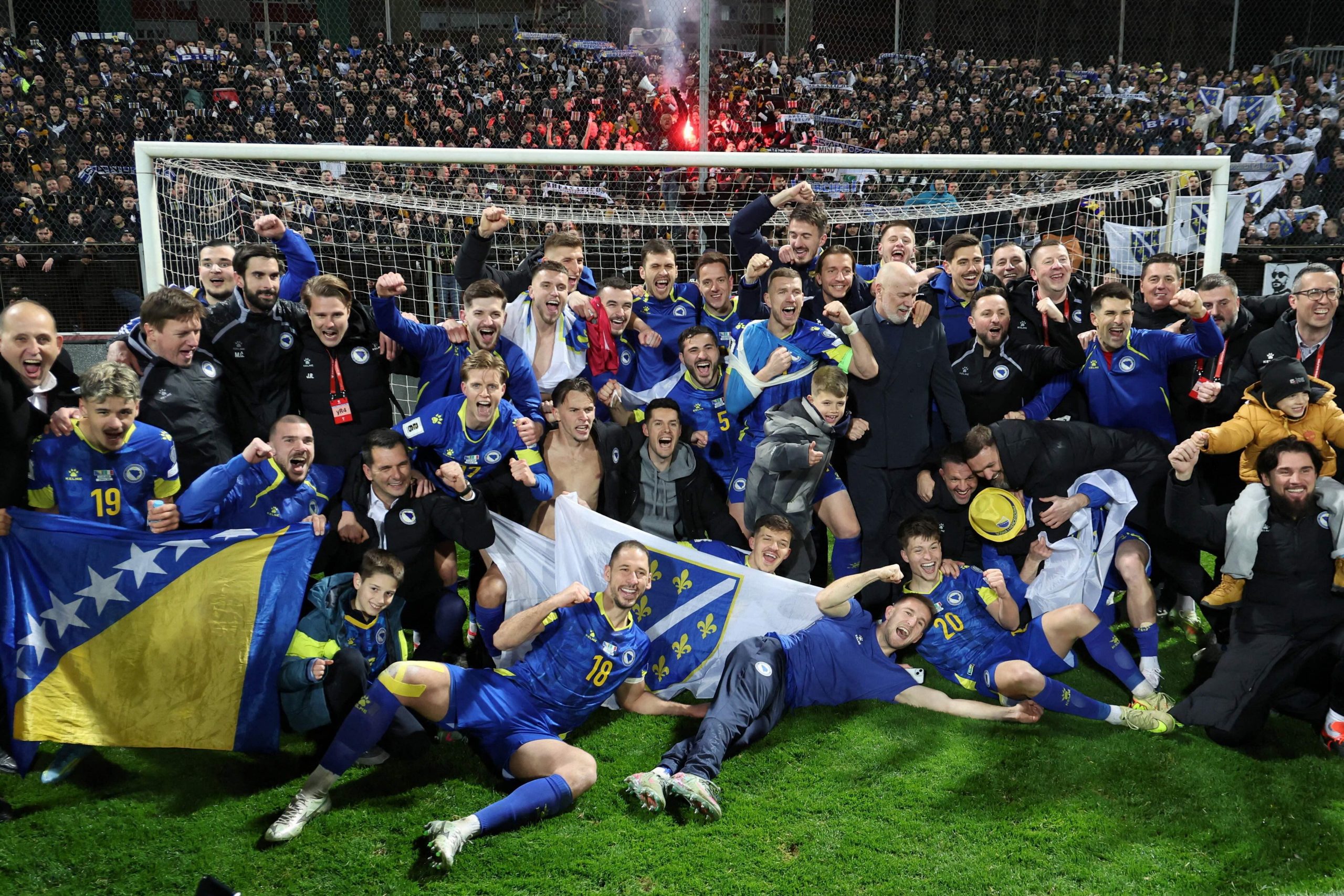
Bosnia is going to the World Cup!
Bosnia & Herzegovina hosted Italy in Zenica at Bilino Polje in the World Cup playoff final, and what a night it was. Another drama, more tension, extra time, and finally penalties. The Dragons left everything on the pitch. After a penalty shootout, Bosnia are heading to the World Cup!
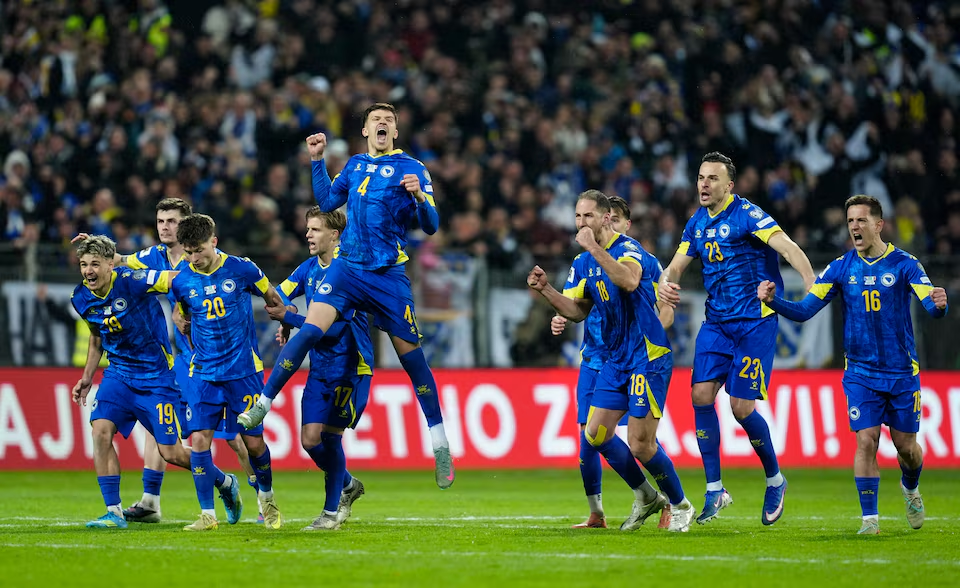
A Historic Night That Will Never Be Forgotten
As Esmir Bajraktarević stepped up to take the final penalty with the World Cup on the line, the crowd in Zenica went silent. A deep breath, then a strike that sent the ball past Gianluigi Donnarumma’s outstretched hand and into the net. A strike that also sent Bosnia to the 2026 FIFA World Cup.
For a brief moment, there was a pause, the kind where everything feels suspended before reality catches up. Then it all erupted. Players sprinted in every direction, the bench emptied, and inside the stadium, the noise became overwhelming. Beyond Zenica, across cities and towns in Bosnia and Herzegovina, people poured into the streets, horns blaring, flags waving from car windows and shoulders, voices rising together as the night turned into a celebration no one wanted to leave.
It wasn’t just about qualifying. It was something that had been building for years, something that had slipped away too many times before. Bosnia and Herzegovina had done it the hardest way possible, beating Italy in a penalty shootout in a match heavy with history. Under the lights at Bilino Polje, that history finally shifted.
A History That Weighed Heavy
Even though Bosnia had qualified for the World Cup before, under the leadership of legendary Safet “Pape” Sušić at Brazil 2014, this felt different.
For years, Bosnia had been stuck in the same place whenever it mattered most. The playoffs were always the barrier, the final step that never quite came together, no matter the squad or the moment. It became something that followed the team, not always spoken about directly, but always present when matches tightened and pressure grew.
The pattern was clear. Bosnia fell to Portugal in the playoffs for the 2010 FIFA World Cup, and again for UEFA Euro 2012, the same opponent, the same ending. The Dragons were then eliminated by the Republic of Ireland in the UEFA Euro 2016 playoffs, before losing on penalties to Northern Ireland in the UEFA Euro 2020 playoffs. Most recently, Ukraine ended their hopes in the UEFA Euro 2024 playoffs.
Five attempts, five losses. Each one different, but all ending the same way.
So when Bosnia’s qualification campaign for the 2026 World Cup faltered in Vienna in November 2025 with a defeat to Austria, it did not feel like a single bad result. It felt like the beginning of a familiar path, one that would once again lead through the uncertainty of the playoffs. There was no shortcut this time either, just another difficult road and another chance to change something that had held them back for so long.
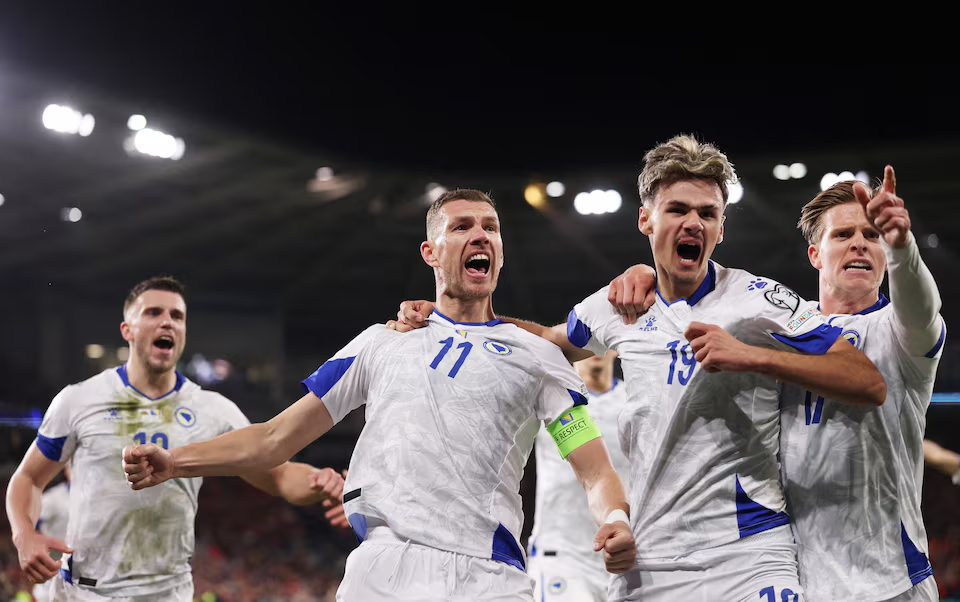
Cardiff, The Battle of the Dragons
That road took Bosnia to Cardiff, into a match that quickly became exactly the kind of battle they expected. Wales were physical, organized, and comfortable making the game difficult. Bosnia had stretches of control but struggled to turn possession into clear chances, and as the match wore on, tension began to build.
When Wales took the lead, the feeling shifted. Bosnia pushed forward, but the finishing touch was missing. Ermedin Demirović found himself in promising positions more than once, yet the chances slipped away. With each missed opportunity, the urgency grew heavier. It began to feel like another playoff match that would end just short.
The breakthrough came late, almost too late. In the 86th minute, Edin Džeko rose in the box and met a cross with a header full of precision and power, sending the ball into the net and pulling Bosnia level. At 40 years old, the Bosnian Diamond delivered when it was needed most, extending the night and keeping everything alive.
Extra time stretched both teams, but neither could find a decisive moment. Once again, Bosnia faced penalties, the very situation that had undone them in the past.
When Demirović’s effort was saved, the weight of history seemed ready to return. This time, it did not. Nikola Vasilj produced a crucial save against Nico Williams, shifting the balance just enough.
The moment came down to Bosnia’s wonderkid, Kerim Alajbegović, just 18 years old, standing over a penalty that would decide everything. There was no hesitation, no sign of doubt. When the ball hit the net, Bosnia had finally done it.
They had won a playoff match.
The reaction was immediate. Players ran toward the traveling supporters, around 3,000 strong, who had carried their belief into the night and were now celebrating a moment years in the making.
But the job was not finished.
Zenica, The Final Destination
Five days later, Bosnia returned home to face Italy, who had just defeated the Republic of Ireland in the other semifinal. A team with its own pressure and expectations.
Italy, four-time world champions, had not qualified for a World Cup since 2014, and that reality hung over the match. For Bosnia, the opportunity was different, but just as significant.
The match began with intensity, but Italy struck first. A mistake in possession allowed Nicolò Barella to step in and quickly move the ball forward to Moise Kean, who finished to give Italy the lead. The stadium reacted with tension rather than silence, a recognition of how much work remained.
Bosnia responded by pushing higher and committing more numbers forward, gradually forcing Italy deeper. The turning point came when Alessandro Bastoni brought down Ivan Bašić as the last defender, resulting in a red card that shifted the balance.
Manager Sergej Barbarez reacted. Šunjić and Kolašinac came off, while Alajbegović and Tahirović entered. Dedić moved to left back, and Memić shifted to the right side of defense.
The equalizer arrived in the 79th minute, when Haris Tabaković found the net and brought the stadium to life.
What followed was relentless pressure, wave after wave, as Bosnia searched for a winner. Italy held firm, defending deeper and deeper. Even in extra time, both sides had chances, but none proved decisive.
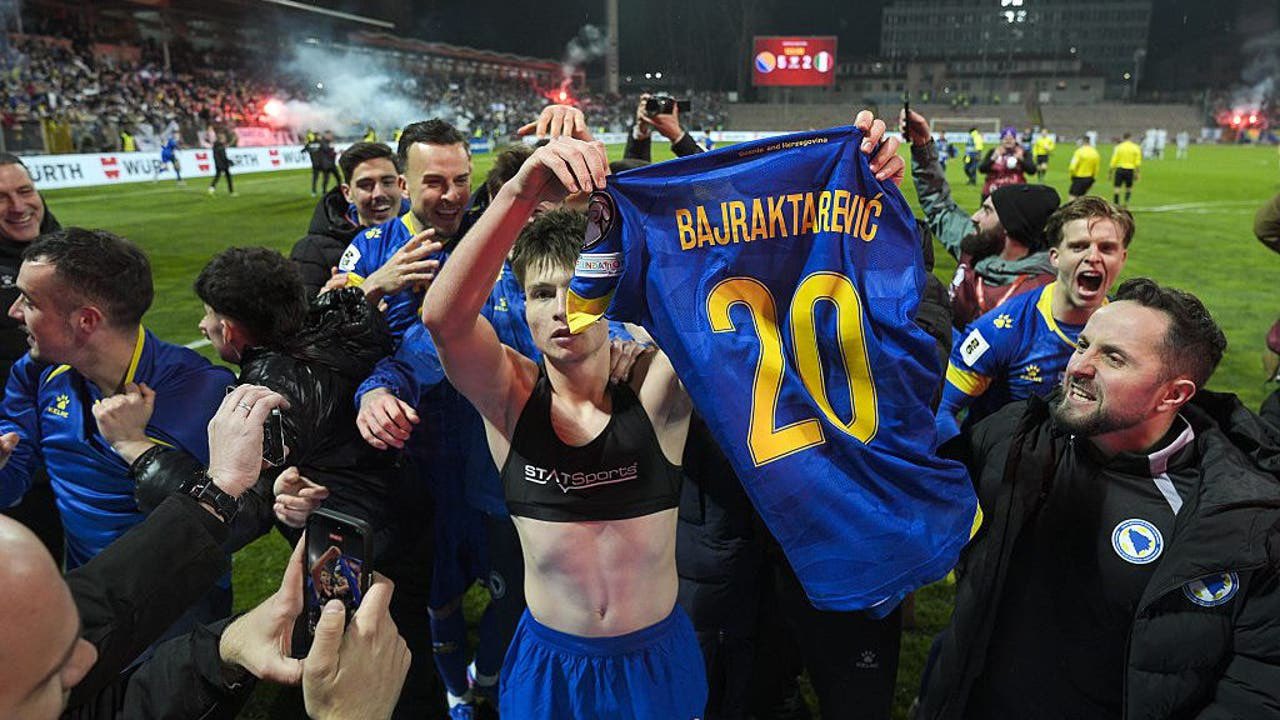
The Moment That Changed Everything
After a nerve-wracking, scoreless extra-time period, it came down to penalties once again. Standing in the way was the imposing 6’5″ Gianluigi Donnarumma, widely considered one of the best goalkeepers in the world.
Bosnia stepped up first. Tahirović converted calmly. Esposito missed, blasting over the bar. Tabaković made it 2–0. Tonali responded to make it 2–1. Alajbegović scored for 3–1. Then Cristante hit the crossbar. It all came down to Bosnia’s other wonderkid, 21-year-old Esmir Bajraktarević. He approached with composure, struck low, and found the net.
In that moment, everything that had built up over years of near misses and heartbreak gave way to something different. What followed was more than celebration, it was release.
Players dropped to the ground. Others ran toward the stands. The noise inside the stadium carried far beyond it. Among them was captain and leader Edin Džeko, his shoulder in a sling after fracturing it earlier in a heavy collision, still celebrating and still part of the moment he helped create.
This was more than qualification. It was a breakthrough.
A breakthrough built on resilience, determination, and heart. For a small European nation that endured so much not long ago, this was a moment of pride and unity. For years, Bosnia had fallen short at the playoff hurdle. This time, they did not. They endured, through Cardiff, through Zenica, through every moment when it could have gone the other way.
And when it mattered most, they delivered.
Bosnia and Herzegovina are going to the 2026 World Cup, not the easy way, not the expected way, but in a way that will be remembered forever.